Toothache: when to see a dentist and when it is an emergency
What commonly causes toothache, how long it is reasonable to wait, and the signs of swelling or infection that need urgent care.
- Verfasst von
- HealthNaro Editorial Team
- Veröffentlicht
How this page was made: Drafted by the HealthNaro Editorial Team with AI assistance, checked against reputable health sources, and not yet clinically reviewed. Editorial policy
Noch nicht klinisch geprüft
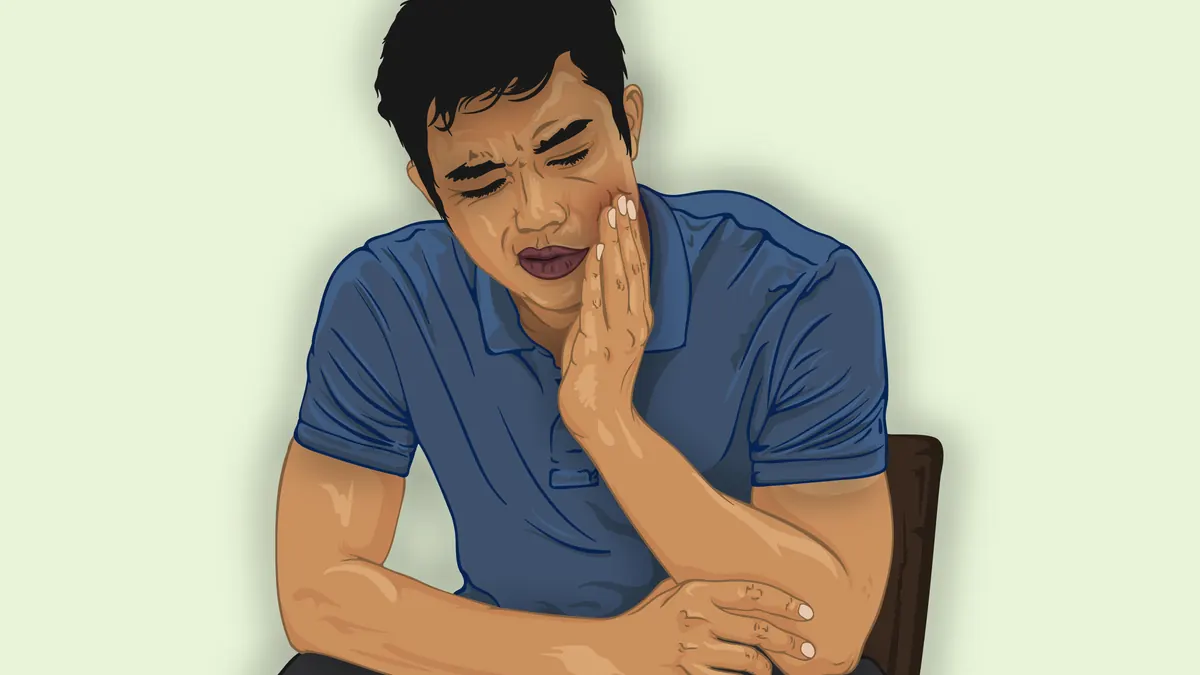
Toothache can range from a dull twinge after something cold to a throbbing pain that keeps you awake. It is hard to judge how serious it is from the pain alone. This post sets out the general guidance on when toothache can wait for an ordinary appointment, when to ask for an urgent one, and which signs mean emergency care.
The short answer
- The NHS advises seeing a dentist if toothache lasts more than two days.
- See a dentist sooner if the pain does not settle with ordinary pain relief, or comes with a high temperature, pain when biting, red gums, a bad taste, or a swollen cheek or jaw.
- Swelling around the eye or neck, or swelling in the mouth or neck that makes it hard to breathe, swallow or speak, needs emergency care straight away.
- A doctor cannot usually treat the tooth itself, so a dentist is normally the right first contact.
Common causes of toothache
Pain in a tooth is a signal that something needs attention. The NHS lists these causes:
- tooth decay
- a dental abscess, which is a collection of pus caused by infection
- a cracked or damaged tooth
- a loose or broken filling
- an infection around a wisdom tooth that has not fully come through
- problems with braces
- gum disease
- grinding the teeth
Tooth pain can also come from sensitive teeth, where hot, cold or sweet things cause a sharp but brief pain. Our post on sensitive teeth covers that pattern.
Decay often causes no symptoms at first. Once a hole forms, the NHS says you may have toothache, sharp pain with hot, cold or sweet food and drink, and white, brown or black spots on the tooth. If decay reaches the soft tissue in the centre of the tooth, a root canal may be needed.
When toothache needs attention
Book a dentist visit if
- the pain has lasted longer than two days
- the pain continues despite pain relief you have been advised to use
- your gums look red or you have a bad taste in your mouth
- it hurts to bite
- you have a high temperature
- your cheek or jaw looks swollen
Seek emergency care if
- the area around your eye or your neck is swollen
- swelling in your mouth or neck makes it hard to breathe, swallow or speak
Do not drive yourself. Ask someone to take you or call the local emergency number. Take a list of your medicines with you.
Easing discomfort while you wait
The NHS suggests a few simple steps while you wait for an appointment:
- Ask a pharmacist about pain relief that suits you, and follow the leaflet. Children under 16 should not take aspirin.
- Eat soft foods and avoid chewing on the sore tooth.
- Avoid very hot, very cold and sugary food and drink.
- Use a soft toothbrush and avoid flossing right around the sore tooth.
- Do not smoke, as it can make some dental problems worse.
- Adults can rinse with warm salt water and spit it out. Children should not, in case they swallow it.
These steps only ease symptoms. They do not treat the cause.
What the dentist is likely to do
The dentist will ask when the pain started and what sets it off, examine the tooth and gum, and often take an X-ray. Treatment depends on the cause. It may be a filling, treatment of an infection, root canal treatment, or in some cases removal of the tooth. If you want to know more about a procedure before an appointment, see our guides on dental fillings and root canal treatment.
For a sudden problem outside normal hours, our dental emergency guide for Kenya lists steps for that setting, and the emergency dental care page explains the service in general terms. In other countries, ask your local health service how out-of-hours dental care works.
How to lower the chance of toothache
Protection comes from steady daily care:
- Brush twice a day for about two minutes with fluoride toothpaste.
- Clean between your teeth every day.
- Keep sugary food and drink to mealtimes and occasional use.
- Have regular dental check-ups, even when nothing hurts.
The dental check-up and cleaning guide shows what a routine visit involves.
Frequently asked questions
Can toothache go away on its own?
Pain sometimes eases, for example if an irritation passes. If it comes back or lasts more than two days, the cause is still there and a dentist should look at it.
Should I see a doctor or a dentist for toothache?
A dentist, in most cases. The NHS says a GP will not be able to give dental treatment. A doctor or emergency department is the right place if you have facial swelling that affects breathing or swallowing.
Is a swollen face with toothache serious?
It can be. Swelling can mean an infection is spreading. Seek urgent care and emergency care if it reaches the eye or neck or makes breathing or swallowing difficult.
What if I cannot get a dental appointment quickly?
Call your dentist, as an answerphone may give out-of-hours advice. If you do not have one, contact your local health helpline or a nearby clinic and ask about emergency appointments. You can also send an inquiry to ask HealthNaro for help finding a clinic.
General information only
This article is general information, not medical advice. It does not diagnose the cause of your pain. If you have facial swelling that spreads, a high temperature, or difficulty breathing or swallowing, seek emergency medical care immediately.
Wenn Sie glauben, einen medizinischen Notfall zu haben, kontaktieren Sie sofort den örtlichen Notdienst oder gehen Sie in die nächste Notaufnahme. Warten Sie nicht auf die Antwort eines Verzeichniseintrags.
Brauchen Sie Hilfe bei der Suche nach einem Anbieter?
Sagen Sie uns, was Sie brauchen und wo. Wir melden uns bei Ihnen, verstehen Ihre Situation und helfen Ihnen, eine geeignete Klinik zu finden und auszuwählen. Dieser Service ist für Patienten kostenlos.
Mehr aus dem Blog
-
Blogbeitrag
Bleeding gums when brushing: causes and when to see a dentist
Why gums bleed when you brush or floss, how to clean them gently, and the signs that mean a dentist should take a look.
3 November 2026
-
Blogbeitrag
Choosing a dentist in a new country: ten questions to ask
Moving or living abroad means finding a dentist from scratch. Ten practical questions to ask before a first visit, from registration and language to emergency cover and records.
1 November 2026
-
Blogbeitrag
Children's teeth: the first dental visit and daily care
When a child's first dental visit is usually suggested, what happens at it, how to prepare a nervous child and the basics of daily tooth care for babies and young children.
1 November 2026